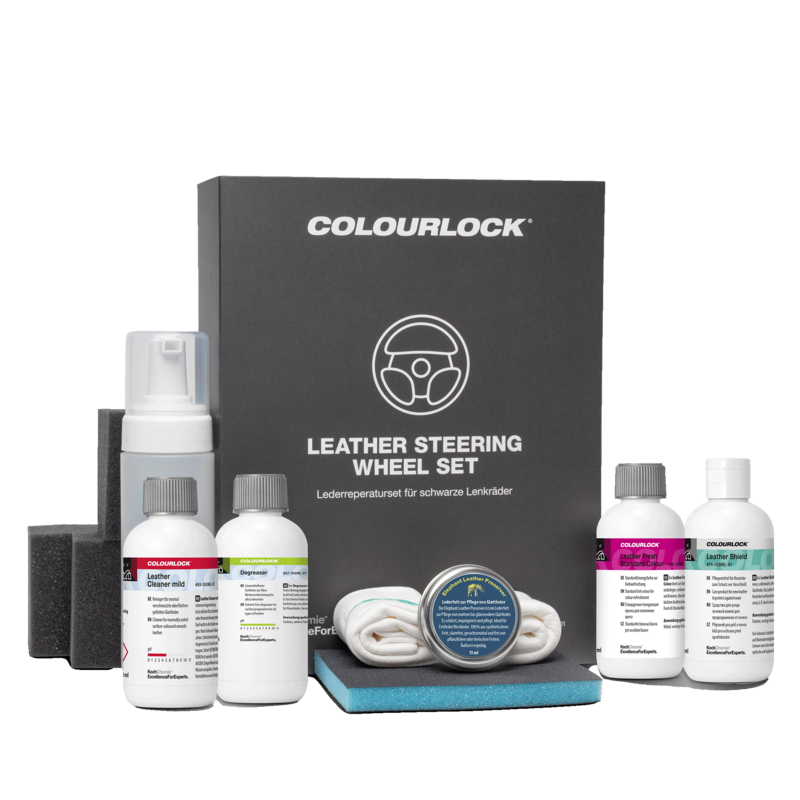
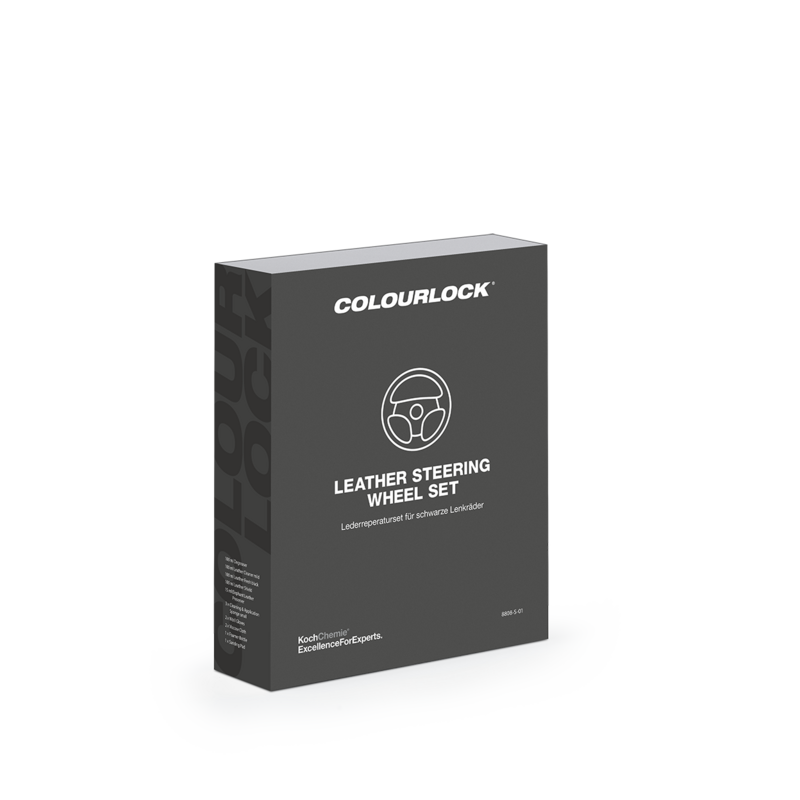
Recommended Use
Please test all products on an inconspicuous area first to prevent any unwanted changes to the steering wheel. We also recommend wearing appropriate protective gloves during all steps of the process.
1. Cleaning – the foundation for perfect results
- Fill the empty foamer bottle completely with Leather Cleaner Mild
- Apply the foam to a sponge
– do not apply directly to the steering wheel
- Clean the entire steering wheel with the foam
- Lightly dampen the included cloth and remove dirt and any remaining cleaner
- Allow the surface to dry completely
- Repeat the cleaning process if necessary
2. Sanding – for smooth transitions
- Carefully smooth out rough spots with the sanding pad
3. Degreasing – for optimal adhesion
- Apply a few drops of degreaser to the included cloth and spread evenly
- Allow to air dry thoroughly again
Tip:
To check adhesion: Apply masking tape and peel it off again → If it sticks firmly, the surface is optimally prepared
4. Dyeing – targeted refreshment for your steering wheel
- Shake Leather Fresh well
- Apply by dabbing with the sponge
– never apply directly to the steering wheel
- Dry with a hair dryer after each thin layer
- Apply several thin layers for an even result
- After dyeing, the surface must dry for 24 hours
For older steering wheels:
- Use Elephant Leather Preserver: Apply a small amount of leather grease to the third cloth and apply evenly without applying pressure
- Let the leather grease soak in overnight
- The next day, polish thoroughly to restore the natural texture
- Alternatively: If no re-greasing is necessary, proceed directly to Step 5 (sealing)
Tip:
- An uneven application of color can be carefully evened out with the sanding pad and then re-tinted.
- Leather Fresh can also be applied to synthetic leather and plastics
- Take special care when working on seams with different colors
5. Sealing – for a like-new, protected surface
Before sealing, the leather must be dry for at least 24 hours, clean, and free of residue.
Here’s how:
- Apply a few drops of Leather Shield to the sponge
- Apply thinly and evenly without rubbing too hard
- One application is usually sufficient
- Repeat the process only for extremely delicate or highly absorbent leather
- Then dry with a hair dryer.
Maintenance interval:
Heavily used leather surfaces (e.g., exposure to sunlight, frequent use): treat every 3 months Leather surfaces with normal use: every 6–12 months is sufficient
 Deutsch
 Englisch
 Französisch
 Spanisch