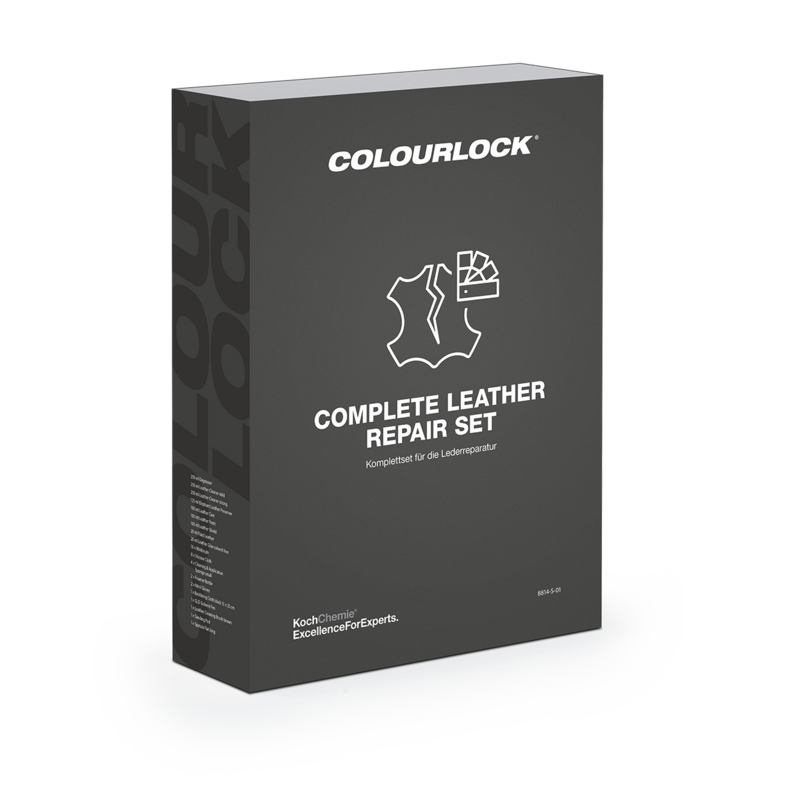
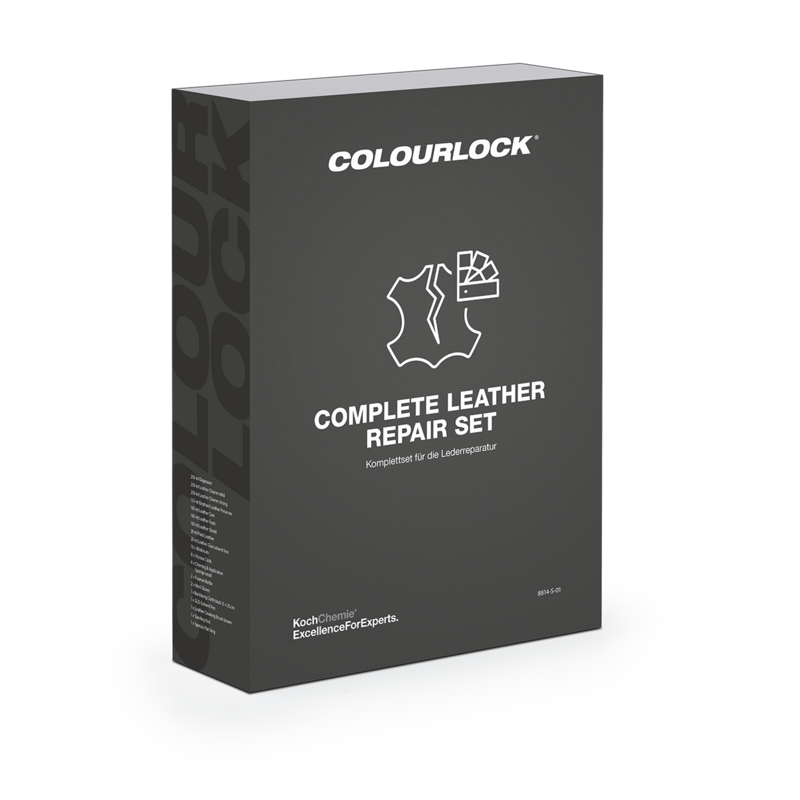
With this set you can repair scratches, abrasions, slight fading, minor tears and cracks on leather surfaces - e.g. vehicles or leather furniture sets - quickly, reliably and permanently.
Note:
Please test all products on a concealed area first to rule out any undesirable changes to the leather.
We also recommend wearing suitable protective gloves during all work steps.
1. cleaning - the basis for perfect results
Before you repair your leather, it must be thoroughly cleaned.
Accessories:
Leather Cleaner mild, Leather Cleaner strong, Foamer Bottle, cleaning sponge, leather brush, cloth
This is how it works:
- Pour Leather Cleaner mild (for heavy soiling: Leather Cleaner strong) into the empty foamer bottle
- Apply the foam to a sponge - do not apply directly to the leather
- Clean the leather from seam to seam with the foam
- The leather cleaning brush makes it easier to work with heavy soiling in the depths of the grain.
- Lightly moisten the enclosed cloth and remove dirt and cleaner residues
- Then allow the leather to dry completely
- Repeat the cleaning process if necessary
2. sanding - for smooth transitions
Accessories:
Sanding pad
Application:
- Carefully smooth rough areas with the sanding pad
3. degreasing - for optimum adhesion
Accessories:
Degreaser, cloth
Application:
- Apply a few drops of Degreaser to the enclosed cloth and apply evenly
- Then allow to flash off well
Tip: To check adhesion: Apply masking tape and peel it off again
→ If it sticks firmly, the surface is optimally prepared
4. preparation & bonding of beads and cracks
Accessories:
Leather Glue, brush
Application:
- Apply Leather Glue sparingly and thinly to cracks
- Spread in small beads or hard-to-reach areas with the brushes provided
- Allow the glue to dry briefly
- Join cracks butt to butt or - if possible - glue with fabric and light pressure
5. repairing larger cracks and holes
Accessories:
Leather Glue, brush, backing cloth, fluid leather, GLD, spatula long
Gluing:
- Larger tears require backing with fabric - this is the only way to stabilize and permanently repair the damaged area.
- Overlap the fabric and cut to size
- Mark the center of the fabric with a highlighter or sticker to ensure even positioning
- Fix the marked center with a pin
- Smooth the edges under the leather
- Then glue and allow to dry
Filling
- Apply Fluid Leather evenly to the damaged area
- Smooth the compound with a spatula
- Allow to dry at room temperature for 1-2 hours, depending on the thickness of the layer
- Repeat the process until the area is evenly filled
Note:
- The drying process cannot be accelerated using a hair dryer
- It is normal for the product to seep out during drying and this does not affect the final result
- Liquid leather cannot be sanded
- Uneven areas can be smoothed with the GLD pen
Smoothing:
- Open the GLD pen, press the felt tip in several times until moistened
- Dab off excess if necessary
- Apply a little pressure over the repaired area
- Allow to dry in between
- Replace or turn tip if color changes or soiling occurs
Note:
Always work carefully and with as little GLD as possible to prevent the repair area from running or smudging.
6. dyeing - targeted refreshment for your leather
Accessories
Leather Fresh, sponge
- Shake Leather Fresh well
- Apply with the sponge, dabbing from seam to seam - never apply directly to the leather
- Only treat areas to be re-dyed
- Intermediate drying with a hair dryer after each thin coat
- Apply several thin coats for an even result
- The leather must dry for 24 hours after dyeing
Tip:
An uneven application of color can be carefully evened out with the sanding pad and then re-tinted.
- Leather Fresh is only suitable for refreshing the color on small areas
- Leather Fresh can also be applied to synthetic leathers and plastics
- Particular care must be taken with seams of different colors
7. care - for a supple and protected surface
Before care, the leather must be dried for at least 24 hours, clean and free of residues.
This is how it works:
- Apply a few drops of Leather Care to an enclosed cloth
- Apply thinly and evenly from seam to seam
- Do not polish, simply leave to dry
- One application is usually sufficient
- Only repeat the process for extremely dry or highly absorbent leather
Care interval:
Heavily used leather surfaces (e.g. on heaters, sunlight, frequent use): reapply every 3 months
Leather surfaces subject to normal wear: every 6-12 months is sufficient
For older and hardened leather surfaces:
- Use Elephant Leather Preserver: Apply a little leather grease to a cloth and apply evenly without applying pressure
- Leave the leather grease on overnight
- Polish thoroughly the next day to restore the natural grip
- Alternatively: If no re-greasing is necessary, proceed directly to step 8 (sealing)
8. sealing - for a protected surface as good as new
The leather must be dry, clean and free of residue for at least 12 hours before sealing.
This is how it works:
- Rub a few drops of Leather Shield into an enclosed cloth
- Apply thinly and evenly from seam to seam
- Do not polish, simply leave to dry
- One application is usually sufficient
- Only repeat the process for extremely sensitive or highly absorbent leather

 Deutsch
 Englisch
 Französisch
 Spanisch